Gold in Technology
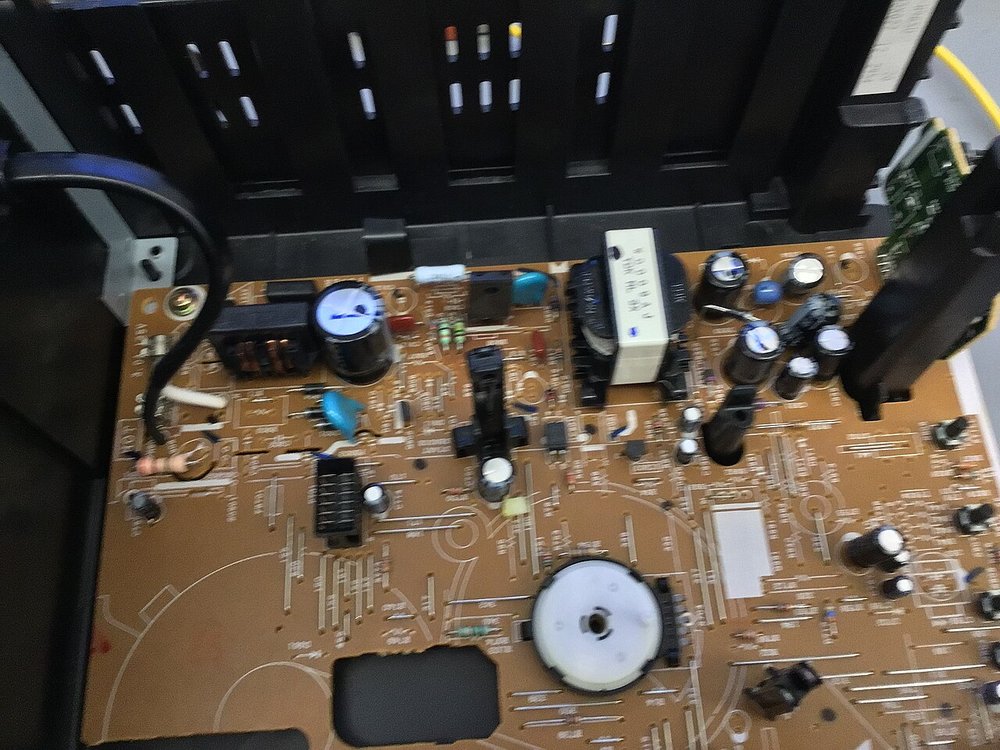

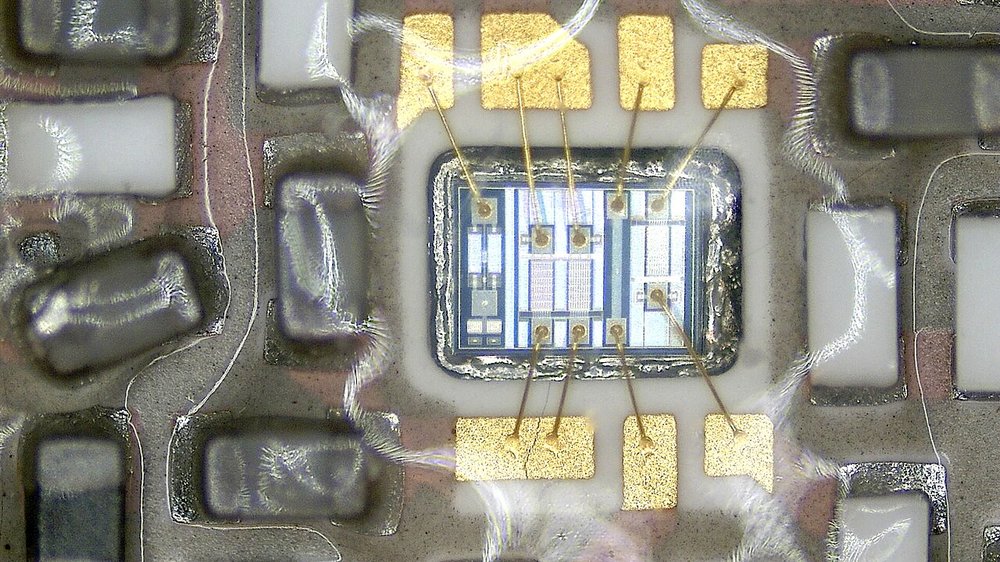
There is gold in your pocket right now — about 50 milligrams of it inside your phone. Gold is also on the most powerful telescope ever built, in dentists' offices, and in spacecraft flying beyond the planets. Technology takes only about 6-8 percent of gold demand, but it is the use that depends most on gold's chemistry.
In short
Technology used about 323 tonnes of gold in 2025, according to the World Gold Council — electronics took about 270 tonnes and dentistry about 8 tonnes. Gold is used because it conducts electricity well and never corrodes, so a connection stays reliable for years. The James Webb Space Telescope's mirrors are coated in gold, which reflects about 99 percent of infrared light, and a typical smartphone contains about 50 milligrams of gold.
Electronics: the connection that never corrodes
Gold's great gift to electronics is that it does not corrode. Silver and copper conduct electricity better, but they grow a resistive oxide layer over time; gold never does. So gold coats the contacts of connectors, switches, and circuit boards wherever a connection must stay reliable for years — in phones, computers, and communications equipment. A typical smartphone contains about 50 milligrams of gold, worth only a few dollars on its own, but across nearly a billion phones made each year it adds up to billions of dollars.
Gold can also be drawn into wire thinner than a human hair, or beaten into leaf a fraction of a micron thick. Its chemical inertness — it does not react with air or water — means it survives damp, heat, and time in a way no cheaper metal can.
Space: gold mirrors and visors
In space, gold's job is to reflect heat. Gold reflects about 99 percent of infrared light, compared with 85-95 percent for silver and aluminium, according to McGill University. That is why the 18 beryllium mirror segments of the James Webb Space Telescope carry a thin gold coating, applied by vacuum vapour deposition — only about 48 grams of gold in total coats all 18 segments. Gold-coated polyester films shield spacecraft and satellites from intense solar radiation, and astronauts' visors are coated with a thin layer of gold to block harmful radiation while still letting them see. Gold is even used as a lubricant between moving parts in space, since ordinary lubricants would evaporate or break down under radiation.
Dentistry and medicine
Gold has been used in dentistry since at least 700 BCE, when dentists used gold wire to fasten replacement teeth. Today it is used for crowns, bridges, and orthodontic devices, because it does not corrode in the mouth and is not toxic. In medicine, the gold compound auranofin has been approved by the US Food and Drug Administration since 1985 to treat rheumatoid arthritis, and gold compounds and isotopes have been used to treat certain cancers.
Small share, vital role
Technology is the smallest of gold's four demand categories — jewellery, investment, central banks, and technology — at about 6-8 percent of demand. But it is the use where gold cannot easily be replaced: where a connection must not fail, a mirror must not tarnish, or a device must work in the vacuum of space, engineers still reach for gold. When old phones and computers are recycled, that gold is recovered and used again — gold never wears out, so the gold in a Roman ring and the gold in a phone chip are the same metal, endlessly reused.
Sources: Strategic Metals, "Gold Uses"; First National Bullion, "Various Uses for Gold"; StoneX Bullion, "Uses of Gold" Checked 27 November 2026.